Hey y’all! This post is aimed at people who are making the transition from textbook-based science classes to article-based science classes. Scientific journal articles are dense compared to textbooks and aren’t written with the intent to teach basic concepts but rather with the intent to expand scientific knowledge. It can often be very confusing to figure out what is going on. Here’s how I was taught to read them 10+ years ago and how I still approach them today.
(I) After reading the title, start for real with the Results section.
Why would you do this when you know the abstract will give you a basic overview of the study and the introduction will set the context? Because you want to be an active reader. You want to figure out what happened in this study in a way that makes sense to you rather than be able to parrot what the author’s say happened. This is the major difference between reading a textbook (where you need to regurgitate the information later) and reading an article (where you need to be able to intelligently discuss the content either in class or in writing).
Look at the tables and figures first. Can you tell what the independent variables were? What the dependent variables are? What might the relationship between them be? What trends or patterns do you see? Depending on your style, it may be a good idea to mark up your document with this information or jot some notes down somewhere else.
Now read the text part of the results. What parts of the figures are the authors choosing to highlight in the text? Are there any results buried in the text that you can’t connect to part of a figure?
Now pause and think. What is the most important result of the study? Highlight where this appears in the text and figures. Remember that important doesn’t necessarily mean statistically significant! A good p-value doesn’t signify real-world meaning; you need to make that connection yourself. Take a moment in this step to notice what results still don’t make sense to you– no need to panic or write questions down yet because you haven’t read the rest of the paper.
(II) Get the gist of the Methods.
Chances are your professor did not assign you this reading with the intent to make you replicate the study. You don’t have to understand every sentence (or even most sentences!) of the methods unless you’re an advanced graduate student. You do have to be able to explain in layman’s terms what the researchers did.
Particularly important questions to answer that can be found in the text include: What were the independent variables? What were the dependent variables? What variables were controlled for, either statistically or through researcher manipulation? What statistical methods were used to look for an association? In health research, we use the acronym PECOT to deconstruct method’s sections.
P = population– who was being studied?
E = exposure– what variable were the researchers trying to determine the impact of? This might be an intervention (ie., a smoking cessation video) or something outside researchers’ control (ie., at least 5 years of daily smoking).
C = comparison– who is the population of interest going to be compared to? This may be a formal control group (ie., smokers who were shown a video on handwashing) or something outside researchers’ control (ie., former smokers of a similar demographic background who haven’t had a cigarette in 5 years).
O = outcome– what were the researchers looking for? This is also known as the independent variable.
T = time– how long were participants/subjects tracked and when were measurements taken?
(III) Read the Introduction.
Now that you have a very good idea about the design and results of the study, you’ll be better able to understand the introduction of the study. The basic goal of an introduction in any scientific paper is to explain why the study happened. The background may give you some helpful context, or it may be redundant at this point. I typically don’t spend much time on the introduction except for the end where the study purpose/research question and hypotheses are usually written. Mark these in the text! You should already have a good idea of the study’s purpose from the methods and results. Here’s some questions you should answer internally or in your notes at this point:
Did the methods align with the purpose?
Did the results support the hypothesis?
What are the scientific implications of these results?
(IV) Read whatever is at the end of the article: Discussion, Conclusion, Reflection, Limitations, Research Implications etc.
It is very important that you save these sections for last because these sections are where researchers tell you what to think of the results. You need to be prepared to critically engage with their interpretation of the results by already having your own. That’s what the three questions above are about! Of course, the discussion was probably written by multiple advanced scientists and you are but a lowly student. That doesn’t mean you should accept their conclusions without seeing their logic. As you read the discussion, think about these questions:
Do the researchers think the results support the hypothesis?
How are the researchers interpreting the primary results? [Bonus: what other interpretations are there, and are they mentioned?]
What do the researchers think the scientific implications of these results are?
What limitations do the researchers acknowledge, and how could those limitations be impacting the results?
(V) Synthesize it.
Try to boil down everything in the paper to just a few sentences that an 8th grader could understand. Whether you think through it internally or write it down is up to you. I usually print out my readings and write my synthesis on the blank back page using the following sentences starters:
The researchers wanted to know whether…
They found that…
This means that…
Taking the time to write the synthesis and any lingering questions you have can be really helpful if, like me, you do reading far in advance of class and need a quick refresher to glance at before class starts. It can also be helpful for paper writing or exam studying later. Consider revising your synthesis after you participate in the class discussion or hear your professor’s take on the article in lecture. Don’t rely on the abstract– that’s someone else’s synthesis, not yours.
—
I hope this was helpful!! Don’t feel bad if this process is ridiculously time consuming. I have spent probably 3-4 hours on a 5-page study before. The goal of science writing is to be as concise as possible, which makes reading short articles more difficult than longer ones. I am a graduate student at a top American university, and I typically read 9-12 articles per week this deeply. If a professor assigns more than 4 research study articles per week for a regular course, make sure they explain what students are supposed to be getting out of each article so you can target your reading better. Chances are, you can skip some sections and focus on coming to class with clarifying questions rather than a firm understanding.
Hey there! There are actually quite a few recommended sites for Japanese learners, so I’ll link them right now 🙂
Japanese IO – I’ve used this site quite a few times and I love the interface! The design is really sleek and “to the point,” so there’s no distractions from what you’re trying to do, which is practice reading Japanese. It also has a great library and look-up feature.
朝日学生新聞社 – This is the “kid’s version” of the more adult 朝日新聞社. If you don’t feel that you’re quite up for the adult version, test out the version geared towards kids. They have fewer articles, but there’s plenty for a learner to pick through.
NHK NEWS EASY – I’m almost positive this is one of the most famous ones for learners. It’s similar to Asahi’s kid newspaper – articles are condensed with easier kanji and vocabulary, and it’s geared towards children, so learners can spend some time combing through updated articles and testing their skills.
Yahoo! Kids – More short news articles geared towards easier-to-understand Japanese.
MATCHA – A fun magazine similar in style to NHK EZ.
Watanoc – Another magazine-type site with a variety of articles.
Traditional Japanese Stories – Get your hands on some easily printed Japanese stories that are told to children. Great for language skills and culture! Similar to English pop culture stories (like Cinderella and so on), Japan has its own fairytales that are occasionally referenced.
キナリノ – A woman’s lifestyle blog which covers fashion, cooking, decor, and more!
Magazine Lib – You can read PDFs of Japanese magazines.
1000文字小説 – A place where users can submit 1000 characters or less stories.
I also highly recommend starting a Twitter (if you don’t already have one) and following Japanese accounts. I follow a lot of feminist and political accounts so that I’m learning words relevant to my interests, as well as interacting with people that are discussing topics of interest to me (i.e. women and their place in Japanese society).
If you’re curious, you can find me on Twitter at @sydney0313 🙂
I hope this list proves useful to you! (And others.)
why are star wars planets more boring than earth and our solar system like sure we’ve seen desert, snow, diff types of forest, beach, lava, rain, but like…
rainbow mountains (peru)
red soil (canada/PEI)
rings (saturn’s if they were on earth)
bioluminescent waves
northern lights (canada)
salt flats (bolivia, where they filmed crait but did NOTHING COOL WITH IT except red dust?? like??? come ON)
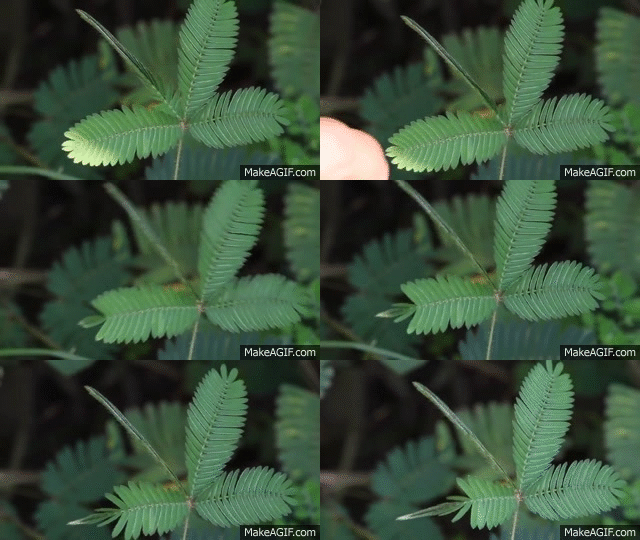
and cool fauna like the touch me not or like, you know, the venus flytrap.. and don’t get me started on BUGS like… we have bugs cooler than sw aliens
BASICALLY like???? come on star wars you had one (1) job where are the cool alien species
I KNOW!! I did a report on filming locations in Star Wars last year and just made a list of places that looked so surreal they could make a convincing other planet. You covered some on my list but if I could just add a couple more:
Tsingy di Bemaraha, Madagascar
Zhangye Danxia, China (similar to the Rainbow Mountains in terms of appearance)
Chocolate Hills, Philippines
Giant’s Causeway, Northern Ireland
So many missed opportunities with cool ass things on Earth, Lucasfilms smh…
Earth is effing amazing!
Quebrada de Humahuaca, Argentina
Lake Retba, Senegal
Tepui, Venezuela
Tianzi Mountains, China
these would make amazing Star Wars planets OR fantasy material:
Tsingy du Bemaraha, Madagascar again (but a different part)
(those are razor-sharp, if you were wondering. very little of this area has been explored because YIKES)
Lake Natron, Tanzania
(looks cool, but is alkaline enough to Kill Your Shit)
Lake Baikal, Russia
(the deepest lake in the world, seriously)
and I’ll wrap it up with Son Doong Cave, Vietnam, the largest cave in the entire world.
it puts anything Dagobah has to offer to absolute shame:
(seriously, the largest chamber is 660 feet high. you could jam a fucking skyscraper in there and still lose it)
anyway I really like caves thanks for coming to my ted talk
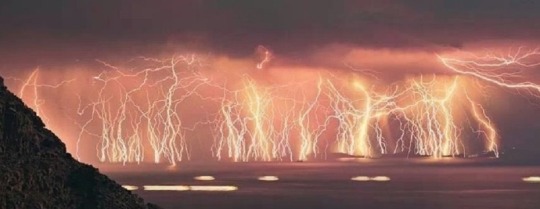
Allow me to throw in Catatumbo Lightning, which is also called the “Everlasting Storm” because it’s been raging for thousands of years in Venezuela and throws down some totally badass lightning on the daily







 べんきょうしなければならない